

Why You Should Get Pre-Approved
Before Looking at Homes
Don't shop blind. Get the paperwork out of the way so you can move fast when it matters.
Here's a scenario that plays out more often than it should in real estate.
A buyer starts working with an agent. They're excited. They start touring homes, falling in love with properties, and eventually they find one they want. They make an offer. And then they find out the hard way - either the offer isn't taken seriously, or it gets rejected outright - because they only had a pre-qualification letter, not a pre-approval.
The frustrating part? Nobody told them there was a difference. Not the agent who spent weekends showing them homes. Not the lender who handed them the letter. The distinction was never explained, and the buyer paid the price in wasted time, dashed hopes, and a deal that never had a real chance.
This blog is about making sure that never happens to you.
⚓ CAPTAIN’S COURSE CORRECTION
Pre-Qualification vs. Pre-Approval: Not Even Close
These two terms sound similar enough that buyers assume they mean basically the same thing. They don't.
The difference is significant - and in today's market, it can determine whether your offer gets taken seriously or gets tossed aside.
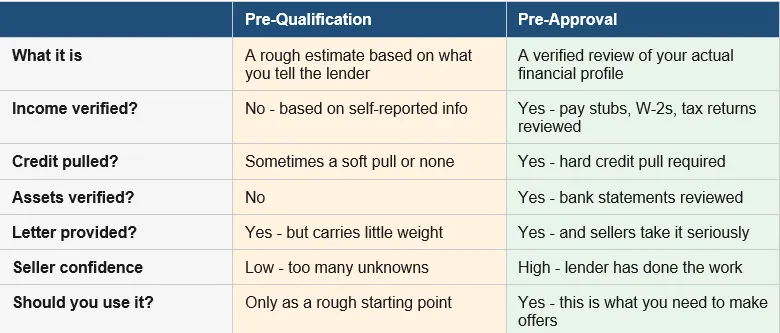
A pre-qualification is based on what you tell a lender. Nothing is verified. It's essentially an estimate. A seller and their agent know this - which is why offers backed by pre-qualification letters are rarely treated the same as offers backed by pre-approvals. In a competitive situation, a pre-qual offer may not even get a response.
A pre-approval means a lender has actually done the work. They've pulled your credit, verified your income and employment, reviewed your bank statements, and made a determination about what they're prepared to lend you. That's meaningful to a seller. It means if you make an offer, there's real confidence behind it.
The Real Cost of Getting This Wrong
Beyond the disappointment of a rejected offer, there's another cost to not getting pre-approved first: you might fall in love with a home you can't actually buy.
I've seen it happen. A buyer spends weeks touring homes in a certain price range, gets emotionally attached to a specific property, makes an offer - and then discovers their actual approval amount is lower than expected, or there's a credit issue that needs to be resolved first. At that point, you're not just disappointed. You may have lost the home to another buyer while you were figuring out your financing.
Getting pre-approved first protects you from that. It tells you exactly what you can buy before you get attached to anything. And it gives you the credibility to move quickly and confidently when the right home comes along.
What You'll Need to Get Pre-Approved
The pre-approval process requires you to hand over documentation. Here's what most lenders will ask for:
Proof of Income:
Last 2 years of W-2s or 1099s
Last 2 years of federal tax returns
Most recent 30 days of pay stubs
If self-employed: 2 years of business tax returns and a year-to-date profit and loss statement
Proof of Assets:
Last 2-3 months of bank statements (all accounts)
Investment or retirement account statements
Documentation of any gift funds (if receiving money from family toward down payment)
Identity & Employment:
Government-issued photo ID
Social Security number (for credit pull)
Current employer contact information
If military: military ID and most recent Leave and Earnings Statement (LES)
Additional Items (if applicable):
Divorce decree or separation agreement (if applicable)
Documentation of any child support or alimony paid or received
Landlord contact info for rental history verification
Certificate of Eligibility (COE) if applying for a VA loan
Have these documents organized and ready before you sit down with a lender. The faster you can provide them, the faster you get your answer.
Credit Score Basics: What Lenders Are Looking At
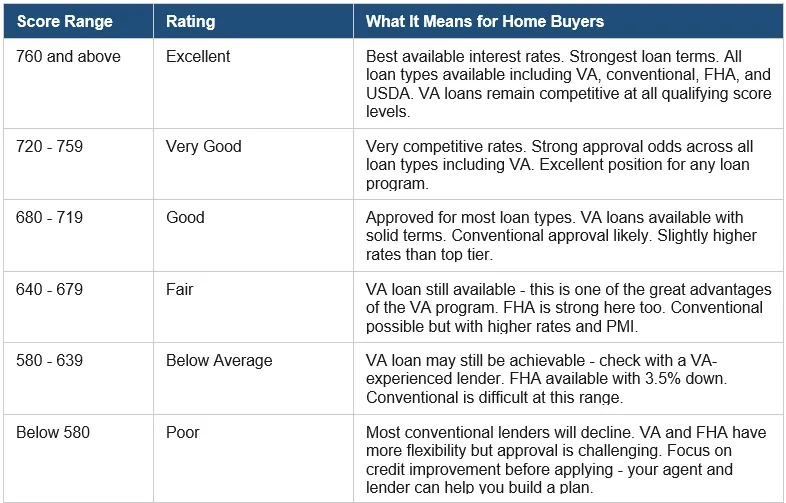
Your credit score is one of the most important factors in your pre-approval. It affects not just whether you qualify, but what interest rate you'll receive - and over a 30-year mortgage, even a small difference in rate translates to tens of thousands of dollars.
⚠ CAPTAIN’S WARNING
Don’t Touch Your Credit Before You Apply
Don't open any new credit accounts in the months leading up to your application. New credit lowers your score temporarily.
Don't make large purchases on credit - furniture, cars, appliances - until after closing. Your lender will pull your credit again just before closing and any new debt can affect your approval.
Pay down revolving balances (credit cards) as much as possible. Keeping your utilization below 30% of your available credit limit is ideal.
Don't close old accounts. Length of credit history is a factor in your score, and closing accounts can shorten it.
Dispute any errors on your credit report. You're entitled to a free report from each bureau annually at AnnualCreditReport.com. Errors are more common than people think and can be corrected.
How Lenders Calculate What You're Approved For
Lenders use several key ratios to determine your approval amount. Understanding these helps you know where you stand before you even apply.
Debt-to-Income Ratio (DTI):
Your DTI is your total monthly debt payments divided by your gross monthly income. Most conventional lenders want to see a DTI of 43% or below, meaning your total monthly obligations - including your new mortgage payment - should not exceed 43% of what you earn before taxes. Some loan programs allow higher DTI with compensating factors like a larger down payment or excellent credit.
Front-End Ratio:
Some lenders also look at your front-end ratio - just your housing payment (principal, interest, taxes, and insurance) divided by gross income. Many conventional lenders prefer this to be 28% or below, though guidelines vary by loan type and lender.
Loan-to-Value Ratio (LTV):
Your LTV is the loan amount divided by the home's appraised value. The lower your LTV - meaning the more you put down - the less risk to the lender, which often means better terms for you. VA loans allow 100% LTV (zero down) for eligible buyers, which is one of the most powerful benefits of that program.
Choosing the Right Lender
Not all lenders are created equal, and the rate and terms you're offered can vary significantly from one institution to another.
Here's what to consider:
Shop around. Get quotes from at least 2-3 lenders. Rates, fees, and loan products vary. Multiple credit inquiries for a mortgage within a short window (typically 14-45 days) are usually treated as a single inquiry for scoring purposes, so shopping doesn't hurt your credit the way people fear.
Ask about loan programs specific to your situation. VA loans, FHA loans, USDA loans, and state-specific first-time buyer programs all have different requirements and benefits. Make sure your lender knows all the options you might qualify for.
Look for a lender who communicates clearly. You need someone who will explain things in plain language, return calls promptly, and keep you informed throughout the process. A lender who is hard to reach before closing will be even harder to reach during it.
In Hampton Roads, look for lenders who are experienced with VA loans. This market has a high concentration of veterans and active duty service members, and a lender who knows the VA loan process inside and out is a significant advantage.
Your real estate agent should be able to refer you to lenders they've worked with successfully - not because they receive anything in return, but because they know who communicates well, closes on time, and doesn't create last-minute surprises at the settlement table.
The Bottom Line
Getting pre-approved is not a formality you do when you're almost ready to buy. It's the first step - the one that everything else builds on. It tells you what you can actually afford, gives you the credibility to compete in this market, and protects you from wasting time on homes that were never really within reach.
Do it first. Before you fall in love with a house. Before you schedule a single showing. Get pre-approved, understand your number, and then start your search from a position of knowledge and confidence.
If you'd like a referral to a trusted lender in the Hampton Roads area, or if you want to talk through your situation before you apply, book a free consultation. We'll get you pointed in the right direction.
If you'd like help creating a personalized home buying plan for Hampton Roads, book a free consultation at coastalva.chat
You can also download the free Home Buyer Budget Worksheet to map out your numbers before you start.
About the Author: Marc Ian Griffin, aka Captain Real Estate, is a licensed REALTOR and Wealth Advisor with Coastal VA Estates LLC, powered by Keller Williams Town Center. A retired U.S. Navy veteran, Marc has called the Hampton Roads area home since 1992. He entered real estate in 2006 because he saw what was happening to everyday families who were losing thousands and, in many cases, losing their homes simply because they didn't have the right person guiding them through the potential real estate pitfalls - and he was determined to be that person. After a period away from the industry, he returned in 2025 with that same mission. Marc serves buyers and sellers across Virginia Beach, Norfolk, Chesapeake, Portsmouth, Suffolk, Hampton, and Newport News.

Expertise
Deep market knowledge.

Integrity
Honesty and transparency.

Excellence
Top-notch services.
Expertise
Deep market knowledge.
Integrity
Honesty and transparency.
Excellence
Top-notch services.
Coastal VA Estates LLC
Powered by Keller Williams Town Center
1 Columbus Center #301 Virginia Beach, VA 23462
Email: [email protected]
Phone: 757-774-7557
QUICK LINKS
FOLLOW US


© 2026 Coastal VA Estates LLC. All rights reserved. Marc Ian Griffin is a licensed REALTOR® in the Commonwealth of Virginia, powered by Keller Williams Town Center. Equal Housing Opportunity.